How to route food to the right kitchen station
Burger to the grill, fries to the fryer, drinks to the counter. See how ninito KDS routes each part while keeping the customer’s order together.
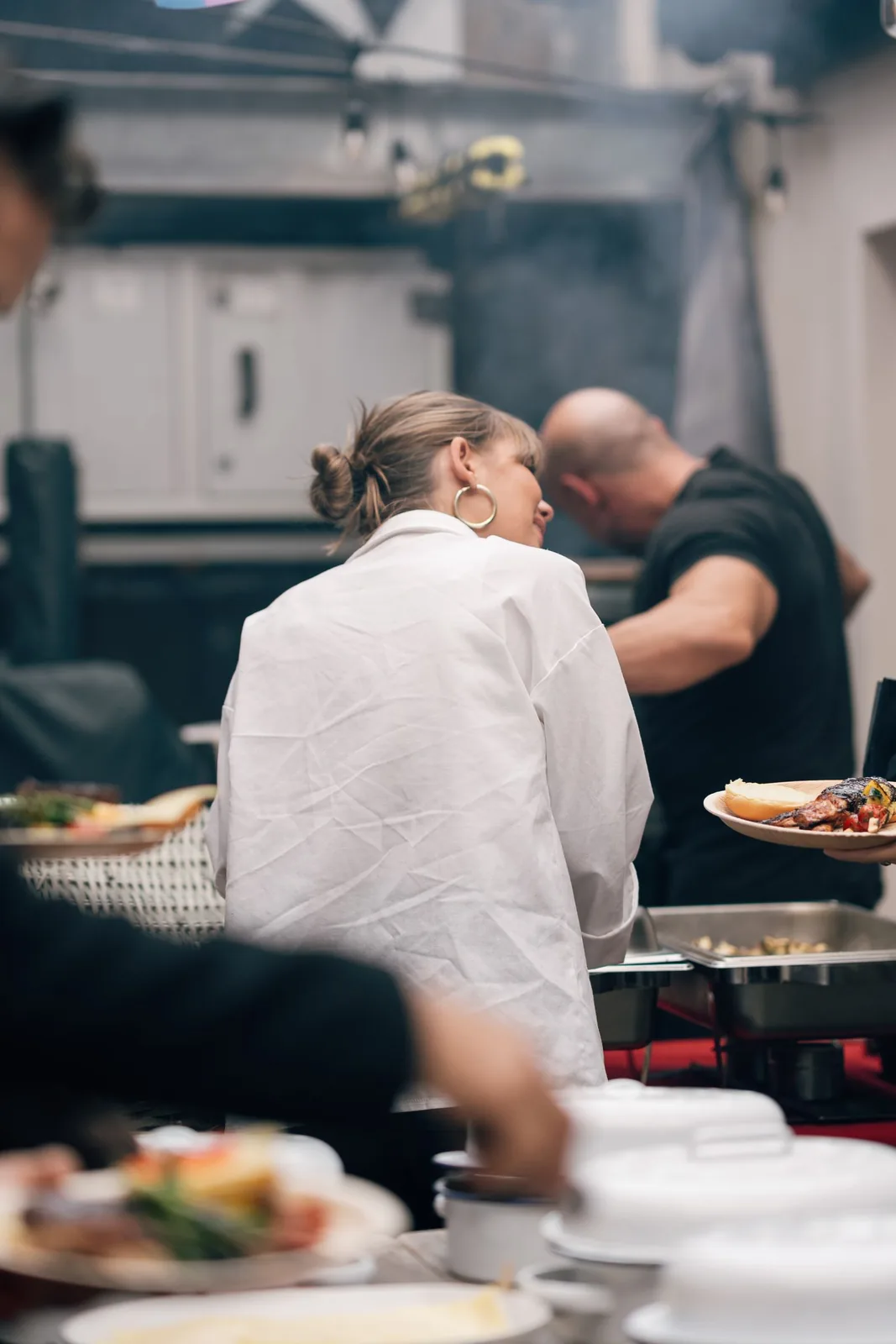
Start with the whole order, not the number of screens
A pizza may be ready at the oven while its salad is still waiting at the cold station. If the pizza station marks the entire order ready, a guest or courier may be notified before the meal is complete. Slow production is not necessarily the problem. The meaning of finished may be unclear at each station.
ninito KDS sends products automatically to the stations preparing them, while every part stays connected to the same customer order. The grill can focus on its work without losing the relationship to sides and drinks. The benefit is fewer messages between stations and a clearer path from an incoming order to a complete meal.
Build a station map the kitchen can correct
List your menu items alongside their preparation locations. Include drinks, sides, sauces and products simply retrieved from a refrigerator. These small components are easily forgotten when a demonstration focuses on the main dish. Establish whether some products require several stations and which station owns the finished component.
Decide what each station needs to see. Too little information creates questions. Too much hides important details among other stations’ work. Let the employees using the station check readability, modifiers and placement. A display that looks neat from the office may be difficult to read where food is actually prepared.
Make statuses mean the same thing to everyone
Distinguish an item in preparation, an item completed at its station and a whole order ready for collection. Agree who may perform each step. A guest notification should follow the complete order and the restaurant’s real handover procedure, rather than the first hot item becoming ready.
Test a station error too. Can the team find the order again? Who stops handover when one component needs remaking? Avoid a process where employees must remember a verbal warning while a display says ready. Visible information and the practical decision should support one another.
Fit screens and stations around the people using them
Look for unnecessary turning, reaching and crossing paths. Whoever reads the order should be able to do so without blocking the next person. Check power, mounting and cleaning against the equipment instructions. Try a new screen position with the kitchen team rather than approving it from a floor-plan image alone.
In ninito’s SmoothieXchange story, a printer was moved and the direction and sorting of printed tickets changed. The example concerns that counter, but the lesson applies to screens too. Information must arrive where an employee can use it. Make a small adjustment, observe the next shift and check whether it creates a problem elsewhere.
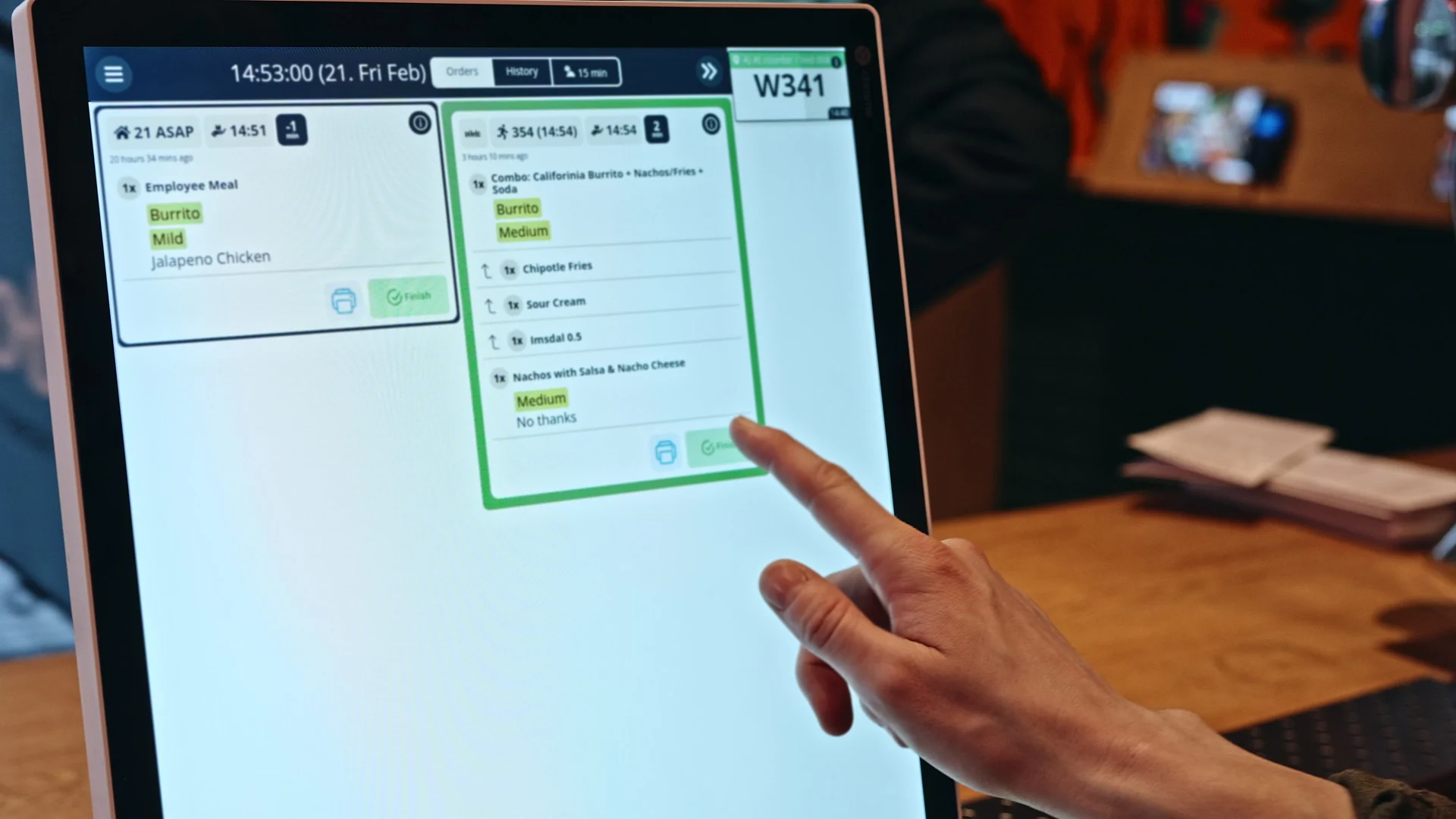
A small kitchen still needs clear responsibilities
A kitchen sharing one workbench may need a simpler view than a venue with separate production areas. Consider whether more screens actually remove questions or merely give staff more places to watch. Repeating information across several surfaces does not automatically improve the workflow.
Start with clear ownership and readable orders. If employees repeatedly leave a station to view an order, or different tasks obscure one another in the same queue, you have a concrete reason to adjust the setup. Let production needs guide expansion, and check that handovers still work after the change.
Build the kitchen around the way you cook
ninito KDS can bring counter, kiosk, online and connected delivery orders into the same production flow. Products go to the right station, and changes and cancellations reach the kitchen. A single-screen kitchen and a restaurant with several preparation areas can use different setups within the same system.
Show us a meal that crosses your stations. We can follow the main dish, sides and drink from order to collection, then discuss the screen placement and responsibilities that make sense in your kitchen.